• Skip to primary navigation
  • Skip to main content
  • Skip to primary sidebar

Locum Tenens Guy

Make the most of your locum tenens work!

  • ❓ New to locums? START HERE
  • 😎 Top Pay Rates
  • 💡 Coaching
  • 📚 Resources
    • 🧾 Tax help
    • Ask questions or leave comments!
    • Locum Tenens Companies Reviews
    • Salary Calculator
    • State Profiles
      • Locum tenens in California
      • Locum tenens in Florida
      • Locum tenens in Hawaii
      • Locum tenens in North Carolina
    • Tax Calculator
You are here: Home / Archives for insurance

insurance

Locum Tenens with Family: My Experience as a Father of Two

November 2, 2020 by LocumTenensGuy

authors portrait

Vlad Dzhashi, MD

Locum Tenens with Family:

My Experience as a Father of Two

As a father of two young children, I prioritize family time over everything else. I want to see my kids grow and experience life with them. 

After all, how can I help them grow up to be successful when I’m not around to learn who they are? If I never learn their personalities, strengths, and weaknesses? 

I think we can all agree that quality family time is of utmost importance… which leads to today’s topic: job flexibility.

Pros and Cons of Hospitalist Shift Work

There’s a perception that hospitalists have one of the best clinical jobs due to time off.

Typical hospitalist schedules of seven days on followed by seven days off give decent time off and some flexibility.  They also allow for predictability, depending on how far out you schedule. This is something many parents can appreciate.

  • Schedule challenges:

However, if you dig a little deeper, you’ll see that this “flexibility” may not be so great. After all, the typical hospitalist schedule may “trap” you on some important days, including holidays. 

Maybe it’s not the end of the world to work a holiday that’s not important to your family. But what about your child’s birthday? Or your anniversary? Do you ask the important people in your life to celebrate on a different day because of your schedule? I don’t know about you, but my family would not be amused!

  • Your sleep vs family time:

The next problem is the “bad” shifts —night and swing shifts. 

Although some hospitalist programs hire nocturnists, some expect their hospitalists to work night and swing shifts. 

Of course, we all know physicians who enjoy working nights, but in most cases, night shifts equal less sleep hence less “quality” family time.

  • Vacation time:

Last, but certainly not least, is the issue of vacation planning. 

If you like to travel across multiple time zones, 7 days off just isn’t enough. Even if you took a family trip to the beach for 7 days, wouldn’t you like a day or two to catch up on everything at home before jumping back into work? (Sometimes we need a vacation from our vacation, if you know what I mean:-)

Requesting time off as a hospitalist could be challenging, if you even have paid time off. Planning a big family trip often requires doing so several months in advance. This is especially true if it’s a popular vacation time, such as winter break or summer holiday. You’ll probably be competing with other people’s schedules.

Locum tenens may be the way to go

If you’re a hospitalist and find yourself nodding along as you read, maybe locum tenens work is for you. I’ve posted in other places about its benefits. As they apply here, the biggest benefit is flexibility.

Personally, after “pulling the plug” on a permanent job, I’ve found that it’s much easier to plan vacations, avoid working nights, holidays, and other important days like my kids’ birthdays.

Who will factor into your decisions?

Is your significant other or partner OK with you being away from home? Is yes, how many days a month? If not, are they willing to travel with you? If your partner works, can it be done remotely? Do you have children? If so, how old? What are your plans for school?

After you answer these questions, you can start planning. There are plenty of options between locum tenens and per-diem work to “engineer” your lifestyle and schedule.

  • Scenario A: No Children

In this situation, the biggest question is whether your significant other will travel with you. Obviously, this depends on employment status and nature of work. 

If your partner will be traveling with you, it’s more likely you’ll be looking for work in desirable locations (Hawaii, here we come!). 

But if the location you choose is less-than-exciting, there’s a good chance you’ll be traveling alone. 

There’s no right answer, of course, so you’ll have to decide what’s best for your situation.

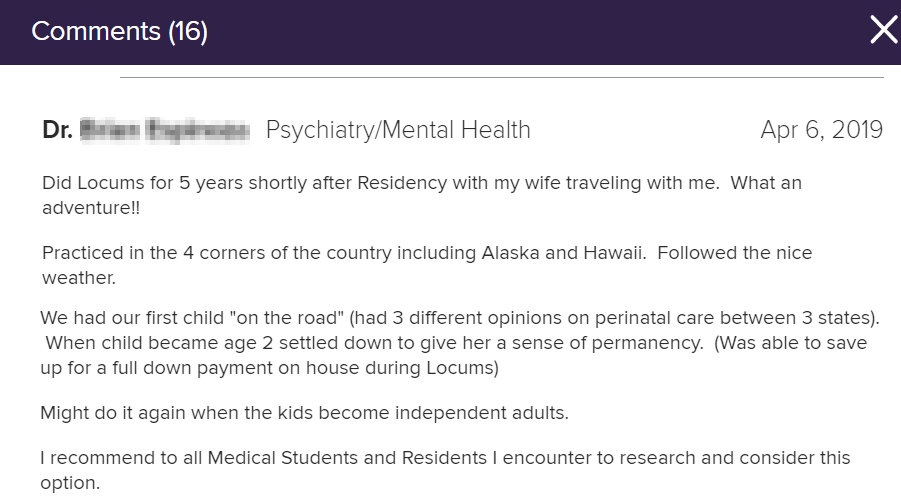
Here’s a good example of how this worked out for a psychiatrist:
  • Scenario B: With Infants and/or Toddlers

Unless you and your significant other love to be on the go, I think having a home base is best in this situation. To maintain flexibility and stay close to home, do part-time work plus per-diem or 100% per-diem.

If your partner can care for the kid(s) on their own, and/or temporary outside help is available, you could choose to take on a locums gig for extra money.

  • Scenario C: School-Age Children

In this situation, your decisions will likely be driven by your plans for school. Do you plan to send your kids to school or will they be homeschooled?

Option 1 – local school:

Again, if flexibility is your goal, and your kids will be attending school close to home, per-diem work may be a better option for you. 

If earning more money is your goal, you can achieve this by finding well-paying gigs out of state or out of town. Just make sure your significant other can and is willing to care for your children alone (or has help)!

Option 2 – homeschooling: 

If you want to homeschool your kid(s), you obviously need a designated teacher for your kid(s). This usually ends up being a stay-at-home parent (sorry, honey…).

The benefit of this is that you can travel with your children ALL THE TIME. This is great if you love to travel, and you can also earn more with locum tenens gigs. 

Living arrangements will be a big consideration here. You don’t want to end up in cramped quarters intended for a single physician. Consider renting a house or large condo or negotiating that into your contract.

  • Scenario D: Adult Children

This might seem pretty obvious, but it’s worth mentioning for physicians in this situation who may feel stuck. 

Many folks send their kids off to college and only see them at holidays or other school breaks. Working locum tenens can allow you plenty of flexibility if you want to be near your kid(s) but don’t need to be present everyday. 

For example, I know a hospitalist who worked locum tenens in the same town as her daughter’s college. She then flew to a different state to work more shifts.

Money vs Flexibility:

Here’s an ugly truth about locum tenens when you need to balance it with family life: you WILL be tempted to work away from home. A LOT of high paying gigs will be away from your home, and unless you take your spouse and kids with you, you will spend this time alone.

A great option to have plenty of family time AND make more money is to work as a per-diem hospitalist: per-diem rates can be as high as locum rates and even higher and you get a long-term flexible job close to home.

  • My experience:

I have a wife and two children, and my goal has been to cut back on travel as much as possible. To maximize my flexibility and family time, I ended up working per-diem at local hospitals and stopped traveling for a couple of years. 

I realize I probably could have made much more money chasing higher paid gigs in different states. But that would mean more time away from my family, which I was not ready for. So the choice was easy for me.

Now that my older kid is in school and my youngest is almost 4, I’m fine with traveling for a week per month to work. I should point out that I only do it if it makes sense financially (i.e., I make more when working away from home).

This gives me a chance to work less during winter and summer months during school break time so my family can travel together. This is absolutely the best time of the year we have as a family: so many great memories and experiences.

I especially appreciate the fact that I DON’T have to ask anyone’s permission and set my schedule the way it FITS me and my family (unlike when I had my first permanent job).

Conclusion:

In summary, there are ways to make locum tenens and/or per-diem work for you, depending on your goals. In my experience, you can outearn any permanent hospitalist job and still have plenty of quality family time.

As featured on

logo_doximity
New to locum tenens? Check out my complete guide for newbies in 2021!

Filed Under: insurance

The best states in the US to work and have fun as a locum tenens doc

September 25, 2020 by LocumTenensGuy

authors portrait

Vlad Dzhashi, MD

One of the perks of working locum tenens is to experience new places and meet new people. It’s the beauty of the job – you get to travel to different states, get exposed to variety of work environments, and explore the surroundings.

The United States is such a gorgeous and diverse place. Why not enjoy the beauty of it while you are traveling on the job?

It’s a no brainer: You make more money than you normally would at a permanent job, while also experiencing new and exciting places.

Today, I want to share with you my “bucket list” of fun locations YOU should consider visiting around the country. 

I am listing the places where you can easily find locum tenens gigs AND have fun and adventures at the same time.

Let’s roll!

Winter Getaways:

Even though I am based in Seattle, let’s face it, the winters here are depressing! 

The weather is not as cold or snowy as the Midwest, and the temperatures rarely get below freezing, but the foggy, rainy and gloomy skies get old very fast!

No wonder Seattleites drink lots of coffee! My theory is that Seattle has such a vibrant coffee scene just due to the fact that it’s hard to wake up to these kinds of winters.

So naturally, a perfect getaway in the winter is for me to find a locum tenens job somewhere sunny and warm, like…

Hawaii

  • Cost of a state license: $221-$392 (odd vs even issuance year)
  • Estimated number of locum tenens jobs: LOW

Volcano Hiking

Yes, you read that right – you can actually hike an active volcano in Hawaii. Keep in mind that it is just not erupting as you are hiking!

There are many great trails around Mauna Kea on the Big Island and Mount Haleakala on Maui. In Hawaii, there are exactly two seasons: “kau” (summer), and “hoolio” (winter), and not many people realize that winter hiking is great fun.

Volcanoes National Park in the Big Island is a playground for hiking enthusiasts. Try Kilauea Iki Trail, which starts in the rain forest on the crater’s rim. Then hit Devastation Trail, where on a clear day you can view the summits of Mauna Loa and Mauna Kea.

The National Park Service also has some great suggestions for where to hike during the winter months.

Whale watching

Another great activity is whale watching. During the months of January through March, whales will frolic in the open Pacific waters during their annual migration, and it is a sight to see! Book ahead for a whale watching tour, as they may fill up quickly.

Surfing

Check out the surfing contests, or go surfing yourself! Hawaii is known the world over for its epic surfing. During the winter, the swells only get bigger, making it a prime time of year for this most adventurous of water sports. 

The waves can reach record-breaking and even dangerous heights. So it is an obvious choice for world-class surfers to show off their skills. Between November and December every year, Sunset Beach is the location of one of the planet’s largest surfing competitions. 

The Vans Triple Crown of Surfing. Head out early and grab your spot on the sand for a day of incredible surf watching.

California

  • Cost of a state license: $1299
  • Estimated number of locum tenens jobs: HIGH (especially in Northern CA)

Whether you enjoy spending your down time in a city, or out in nature, California is the place to be

SF and LA

San Francisco is a big city in a tiny area, making it very walkable and a great place to hang your hat while doing your locum tenens.

It is refreshing to simply explore the city on foot. And while you’re at it, hop on a cable car for an authentic San Francisco experience! Everywhere, there is great shopping and great food.

Los Angeles is a sprawling madhouse of a city, and here you will find both culture and relaxing beaches. Santa Monica Beach & Pier is the perfect antidote to getting the kinks out after work.

Visit the pier, with its great shops and food options, then walk down to the beach and watch the sun set. After dark, hop on the famous roller coaster, when the whole thing lights up and you get a fantastic sensory experience.

Beaches

The Golden State also has an endless number of perfect beaches to choose from. But I will attempt to highlight the best here.

You can’t get much more relaxing than Malibu. Dive into the Californian lifestyle and spend some time at El Matador State Beach. 

Here the beautiful landscape will take your breath away. Enjoy great ocean views high atop rugged cliffs. Explore the sea caves, and then gawk at magnificent sunsets.

Florida

  • Cost of a state license: $1279
  • Estimated number of locum tenens jobs: MODERATE

Despite being a warm state all year round, the state of Florida is very diverse in its landscape. It just depends on what your interests are!

Coastline

Florida has endless miles of coastline, and the northern beaches of Daytona and Coco Beach are a great way to spend your downtime. Not only are the beaches warm and inviting, but their boardwalk areas offer tons of shopping and great bars and restaurants.

Miami

Further south, Miami is another great spot, with its wonderful shopping and cultural attractions. Miami is a mecca for Cuban culture, with its enticing art deco architecture and beautiful people. And who doesn’t love salsa music and great street art everywhere?

Of course, there is Miami Beach, with its clear blue waters, exciting nightlife and boardwalk area. If you do it right, you will need a few days just to explore this area!

Key West

Finally, Key West is a great way to spend some down time and get a true taste of the Caribbean island life. From Key Largo all the way down to Key West, the vibrant waters of the Gulf of Mexico will captivate you as you island hop with a tropical drink in your hand. 

Just don’t hold that drink while you’re driving!

Arizona

  • Cost of a state license: $1000
  • Estimated number of locum tenens jobs: MODERATE

Arizona in the winter months is a really pleasant place to spend your time. Phoenix is a big city, with lots to see, and just outside of town are some really nice outdoor activities. 

To experience the overall natural beauty of Arizona, visit the Desert Botanical Gardens. Here you will see plants that accentuate the beauty of the surrounding Sonoran Desert. During November-December, witness the amazing spectacle of hand-lit luminaria bags and twinkle lights that illuminates the desert at night.

Speaking of awesome light displays, try to catch the World Lantern Festival in Phoenix. Following Chinese tradition, this festival is held every year and attracts quite the crowd! The festival also hosts a number of global cultures and cuisines.

Hiking Arizona during winter is the optimal time, since the scorching hot summers make it difficult! Phoenix has a number of great trails, but also get to Sedona for some epic hiking!

Sedona is an artist’s and fitness-lovers retreat, in a laid-back town with incredible scenery.

Skiing

Skiing is so much fun! And…it will keep you active during the winter. 

Luckily, the U.S. has some of the best ski resorts in the world. Here are some of the places where you could combine working locum tenens with enormous fun…

UTAH:

  • Cost of a state license: $300
  • Estimated number of locum tenens jobs: LOW

Park City, Utah is considered by many to be the best ski destination on the planet. And it couldn’t be easier to get there, as it’s only 40 minutes by car from Salt Lake City Airport!

There are many reasons why this ski town is so popular. First and foremost, it has some of the best powder on Earth. With any luck, you will catch a Monster Dump – when 12 or more inches fall in a 24-hour period. Then watch out, because the skiers will arrive in droves!

And when the ski day is over, visitors and locals alike will descend upon Park City’s walkable and historic Main Street, with its great restaurants, pubs, and vibrant nightlife.

Colorado:

  • Cost of a state license: $412
  • Estimated number of locum tenens jobs: MODERATE

If Park City is the best then skiing in Colorado comes not far behind. Aspen and Vail is in close proximity to the Denver airport.

You may have heard that Vail is the place to see and be seen in Colorado, as lots of celebrities have their ski vacations here. But you’ve come for the skiing, right? So who needs a bunch of celebrities?

Vail, in particular, is a prime ski spot, due to its many trails and unique landscape, forming perfect back bowls, with seven miles of pure powder.

And Aspen, the quirky spirit patron saint of Hunter S. Thompson, offers four mountains for your skiing pleasure. One great thing about Aspen is that it is typically quieter than Vail, so you will rarely encounter lines at the ski lift. 

Aspen also boasts the longest ski run in Colorado, at 5 miles! This town also has a great little main street area, with great food and shopping.

Summer Getaways

Summers are the BEST time to work and play in the Pacific Northwest states of Oregon and Washington. 

Washington state:

  • Cost of a state license: $491
  • Estimated number of locum tenens jobs: MODERATE

Oregon:

  • Cost of a state license: $979
  • Estimated number of locum tenens jobs: MODERATE

The best time is typically July through September, as June can still be a little cool and cloudy. But once the sun decides to make an appearance, it’s no holds barred and summers here are loaded with plenty of fun outdoor activities.

In the Pacific Northwest, you have the best of both worlds, with big cities full of great food, shopping and culture. Then there are the mountains and the ocean. It’s an outdoor lover’s dream.

Seattle has Pike Place Market, the Space Needle, and the best seafood on the west coast. There are many different neighborhoods to explore, and the views of Puget Sound are amazing!

Portland has a great music scene, great breweries, and more of a small-town feel than Seattle. It also has different neighborhoods to explore and over 600 food carts with food from all over the world!


Hiking and biking is a way of life for Portlanders – it is a bike-friendly city, with many large forested parks to hike in. Forest Park is the best.

It will be hard to choose your outdoor adventure in the Pacific Northwest, because there is just so much to see and do here. In Washington, you can explore the San Juan Islands of Puget sound north of Seattle. 

Then there is Olympic National Park, which has the only temperate rainforest in the country.

In Oregon, the coastline has many different small towns and beaches to explore, full of history and great food. And don’t miss a drive through the Columbia River Gorge, just east of Portland. Multnomah Falls is the shining star here.

Alaska

  • Cost of a state license: $500
  • Estimated number of locum tenens jobs: LOW

If you land a locum tenens gig in Alaska, you are in for a treat. There is endless backcountry to explore, and the fishing here is world-class. Stunning beauty awaits you in this remote land.

The highlights in Alaska are Denali National Park, Kenai Fjords National Park, and the historic town of Denali. For the adventurous, try ziplining at Icy Strait Point in Hoonah. Or go on a guided glacier hiking excursion.

RV travel:

In between locum tenens gigs, it may be a great idea to rent an RV and just explore.

Why travel with an RV? There are so many reasons!

  • You can travel throughout the year.
  • You can work on your assignment for a few months then take off and drive to another one, exploring along the way.
  • Driving an RV means you take your temporary home with you wherever you may roam! No hotels to check into, and no unpacking and repacking your suitcase!
  • RV travel gives you freedom to explore wide open spaces, such as National Parks, without having to plan where you need to stop for the night. Just find an RV park or campground, wherever you go.

As you work different locum tenens jobs throughout the country, why not have a ton of fun along the way? 

I want this post to inspire you (and myself) for your next locum tenens adventure. Stop postponing great things, and spring into action NOW!

P.S. I’m turning to you. What destination is on YOUR bucket list?

New to locum tenens? Check out my complete guide for newbies in 2021!

Filed Under: insurance

My TeleHospitalist Experience: Yay or Nay?

September 10, 2020 by LocumTenensGuy

Vlad Dzhashi MD professional headshot

Vlad Dzhashi, MD

I wanted to try telemedicine for a while and although I’d been slammed with emails and phone calls trying to sign me up for outpatient gigs, telehospitalist jobs seemed to be few and far between.

Luckily, I work at a local hospital system that is one of the telehospitalist pioneers in the US. 

They created both telehospitalist and tele-ICU programs from scratch a few years ago. Both are fully functioning at five regional hospitals and expanding now.

I wanna say, it wasn’t easy to get on schedule, since VirtualMD positions (i.e., telehospitalist) are always in high demand and there are rarely any openings. After a few attempts, I was finally scheduled for four nights.

Today, I wanted to share my experience and give you a glimpse of what hospital medicine may look like in the near future.

Click here to download my FREE report: see who’s currently hiring telehospitalists

TeleHospitalist set up

Where?

Unlike many other telemedicine jobs, I didn’t work from home. The hospital provided a separate office space for the telemedicine team. 

Hours:

I worked 11.5 hour shifts, which started at 8:30 pm and ended at 8:00 am.

My workplace:

One thing I absolutely loved was my super crazy sci-fi display setup: there were six monitors, with each of them having its own purpose. 

telemedicine display set up

With this setup, I had all the info available on one of the screens, including EKG’s, EMR, Uptodate, etc. 

Another absolutely cool thing that blew my mind was that some of the patients’ rooms (PCU and ICU) were equipped with cameras so I could get connected and eyeball these patients “virtually.”

On top of that, the desk’s height was adjustable with a push of a button; you could move it up or down and you could raise it to make it a standing desk. Although I was stuck in a chair for the duration of the shift, my teammates kept switching between sitting and standing every couple of hours to prevent DVT.

The Team:

I had two “partners” in crime: RN and NP, so all the calls/messages were distributed equally. Having said that, I was the only one doing admits.

Responsibilities/Workload

1 – Cross Coverage: responding to the calls from hospital nurses across five hospitals. 

The team receives all the messages into a special email folder that is updated real-time. 

The RN would take the easiest calls: prn sleep meds, prn laxatives, ordering morning labs, etc. A lot of the orders were by default, so she would not need to discuss them with an MD or NP. 

Our RN would also help with admin stuff, e.g., getting ahold of a certain floor or a particular service department in the hospital: e.g., lab, microbiology, blood back, etc.

The MD and NP took care of all the other more complicated calls, although the MD was responsible for ICU calls most of the time.

What were the most common calls/messages we would see?

Hypotension, low H&H, other critical lab results, tachycardia/bradycardia, pain meds, patient requesting to leave AMA (my favorite: Really? At 2 am? Don’t you want to sleep?).

Volume:

The average number of calls the telehospitalist team would “process” was close to 300.

Interestingly enough, there were a few very busy times at night: 

Evenings when RNs changed shifts, then 4-5 am when morning labs were back, with a third peak around 7-8 am when morning shifts started.

The time between 1-3 am was a little slow, so I managed to take short naps.

Liability and documentation:

Of course, the liability part is there even if you cover patients virtually.

Think about it: as a telemedicine hospitalist, I was covering almost 500+ very sick patients, some of them in ICU’s.

I came up with my own strategy to provide better “virtual” patient care for the patients and to minimize the liability:

First of all, almost every time I got a message, I picked up a phone and talked to the nurse to clarify the patient’s status and ask questions. I would also glance at the last hospitalist progress note to get a better understanding of what was going on with the patient.

This approach made a big difference, as I caught myself changing my orders after talking to the nurse and reviewing the chart multiple times.

Second, I would also put a note in the chart, documenting what info I’d gotten from the nurse and what new orders or changes I’d made.

These notes were also important for day hospitalists to make sense of what actually happened with the patient overnight.

Now, you may be wondering what if a patient were too sick and needed to be evaluated? 

When this situation came up, I would call an in-house doc and ask him to lay eyes and hands on the patient.

2 – TeleHospitalist Admissions:

One of the hospitals I was covering was a tiny critical access and rehab facility that didn’t have an in-house nocturnist. 

I was responsible for admits that would come overnight as well as for covering their rapid responses and codes. (There was  also an ER doc who was physically present at night and who would help with codes if needed.)

I would first receive a call from the ER doc, discuss the patient’s case, and if I accepted, I would put admission orders in. 

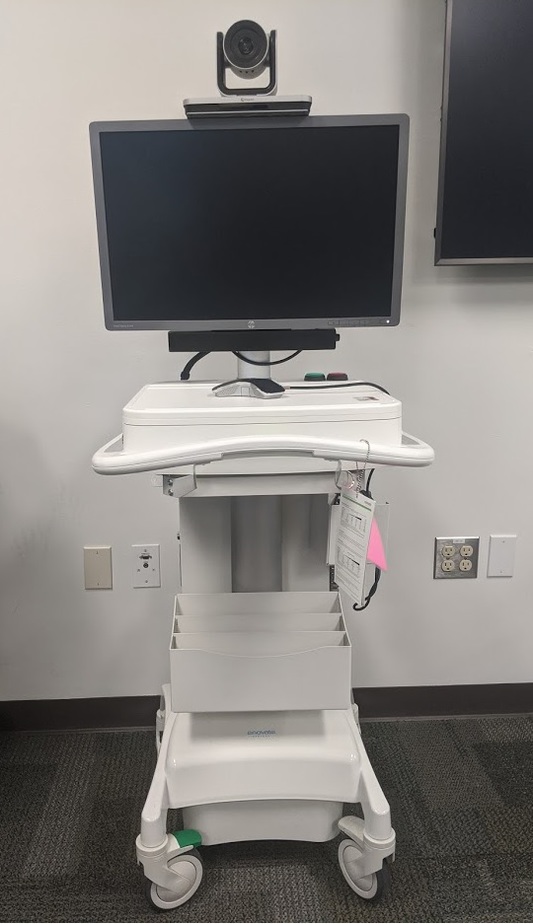
Once a patient reached the floor (this would take an hour or two), the RN would message me and I would connect to the telemedicine cart.

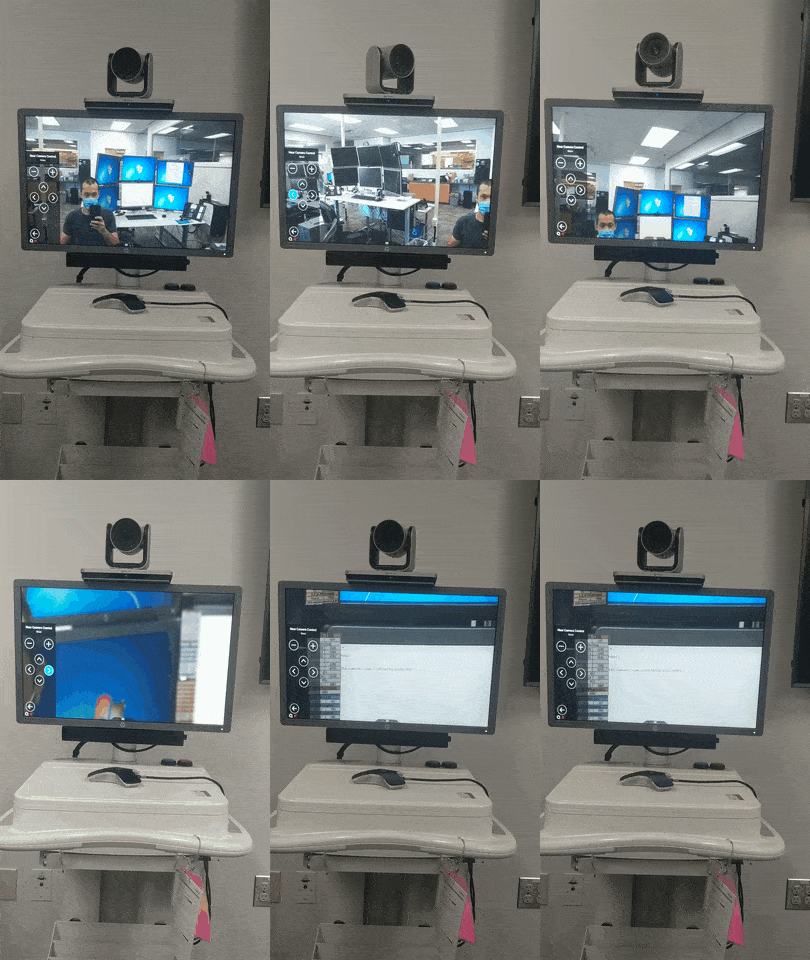
The cart had a camera on top that I could control as well as an attached stethoscope.

I would interview the patient and then ask a bedside RN to help me with the exam. 

Here’s how the physician exam worked:

First, I ask the RN to do palpation, shine the light into the patient’s eyes and mouth while zooming the camera on the patient. She would do a brief neuro exam.

Then I would ask the RN to use the attached stethoscope to auscultate lungs, heart and abdomen, which I would hear in my headphones. 

This way, the physical exam took about five minutes longer than it would normally take. 

At the end, I would disconnect and complete my H&P and add orders if needed.

Final Verdict

Overall, telehospitalist night coverage is a win-win:

1 – It unloads night hospitalists – all they need to do is to stay focused on admission and codes/rapid responses. It keeps your nocturnists’ morale high and surely prevents burnout.

2 – This is great from the patients’ and nurses’ perspective: they get more timely responses, unlike when your night doc is juggling between admits and floor calls.

3 – Also, since all the virtual/telemedicine team does is the cross-coverage, the patients receive more attention, providing better quality of care.

Things to improve:

I would definitely prefer to work as a telehospitalist from home. I don’t see any good reason why this cannot be done from the comfort of your home.

Another issue is that admissions take longer than live admits, and some patients would prefer to see the doctor at the bedside rather than virtually.

P.S. Now, I am turning to you. Let me know in the comments if you’ve done any telemedicine work and what your thoughts are. Is it Yay or Nay?

New to locum tenens? Check out my complete guide for newbies in 2021!

Filed Under: insurance

Powerful yet simple tips on organizing your Locum Tenens Life (Bonus: list of time-saving resources I use).

August 25, 2020 by LocumTenensGuy

authors portrait

Vlad Dzhashi, MD

If you’re having trouble organizing your locum life (and let’s be honest who hasn’t) then the following post could be a GAME-CHANGER.

But first…you MUST realize that keeping things in order works like magic. When you’re organized you feel better, work better, and not only that, your life works better. 

The alternative is to be overwhelmed…’cause we all know that working locum tenens has lots of moving parts: finding new jobs, scheduling, traveling, paperwork, tax planning…you name it! It’s SOOOO easy to feel like you’re drowning and barely able to keep up.

Ultimately, YOU have a choice:

You can be the person who spends twenty minutes looking for his hospital badge, pager and car keys every time you leave for work. Or you can be the person who simply walks out the front door.

Table of Contents

ORGANIZING YOUR "LOCUMENTS"

As you progress through your career, you’re going to accumulate more and more “history”: this means documents, documents, and more documents. 


So…organizing all this crap is important. This way, it will always be right on hand, and you won’t have to spend hours tearing your house apart trying to find what you need.

Physical storage for documents

First things first, you need to keep hardcopies of all the important docs in one place at your home office. 

Here’s how I do it:

  • I’ve bought a few old-school file folders
  • What do I keep there?
  • - Provider agreements (locum tenens companies’ contracts)
  • - State licenses
  • - Malpractice certificates (aka COI’s)
  • - ACLS, BLS certificates
  • - Immunization records
  • - Tax records
  • - Diploma
  • - Residency certificate
  • - CME records
  • - Board certificate
  • - DEA registrations

Virtual storage

The next step is to set up a “virtual” backup. This way you can access your documents anytime, anywhere.

Start by getting a scanner and scanning all your important stuff to cloud storage. I bought an All-in-One HP printer: it prints, scans and makes copies. It costs under $100 and it’s an absolute MUST for a functioning home office.​

In case you’re wondering about the best place to store your documents, I recommend one of the following: Google Drive, iCloud or Amazon Drive. Most of these services are free for the basic data package.

Personally I use Google Drive to keep electronic copies of all my credentialing documents. I’ve had a good experience with it,as it’s synced with my Gmail account.

You should also create a separate folder on your computer desktop with ALL important documents. This way you can attach them to an email quickly since the majority of communication with agencies and hospitals is via email.

Using cloud-based storage will save you a TON OF TIME when you’re applying for a new license or hospital privileges. You simply download and attach all the requested documents to an email, and can also choose to share them by emailing a link.

Dealing with multiple pagers and badges:​

If you work in more than two hospitals, make sure you create a separate badge and pager storage.

The worst thing that can happen is a last moment PANIC before going to the airport when you cannot find your hospital badge. 

I bought this nice little basket and store only pagers and hospital badges there. It looks different from all the other storage boxes I’ve got at home and I try to always keep it in the same place.

Also, put a sticky note on each pager with the name of the hospital, as sometimes it’s not easy to figure out which pager you need.

Basket with pages

TAX DEDUCTIONS TRACKING

Keeping track of your locum tenens expenses is another “time-pit” I used to waste my time on.

Even though you file taxes only once a year, getting an exact number of HOW MUCH you could deduct takes lots of time.

If you’ve ever filed taxes as an independent contractor, you know what I am talking about: if you’re not organized well, let’s just say that filing taxes is going to be HELL.

One hack I’ve found very useful is to keep a separate debit card account and use it ONLY for locum-tenens-related expenses. This way, you can quickly go over all your transactions using online banking and get the exact dollar amount of your annual expenses to deduct.

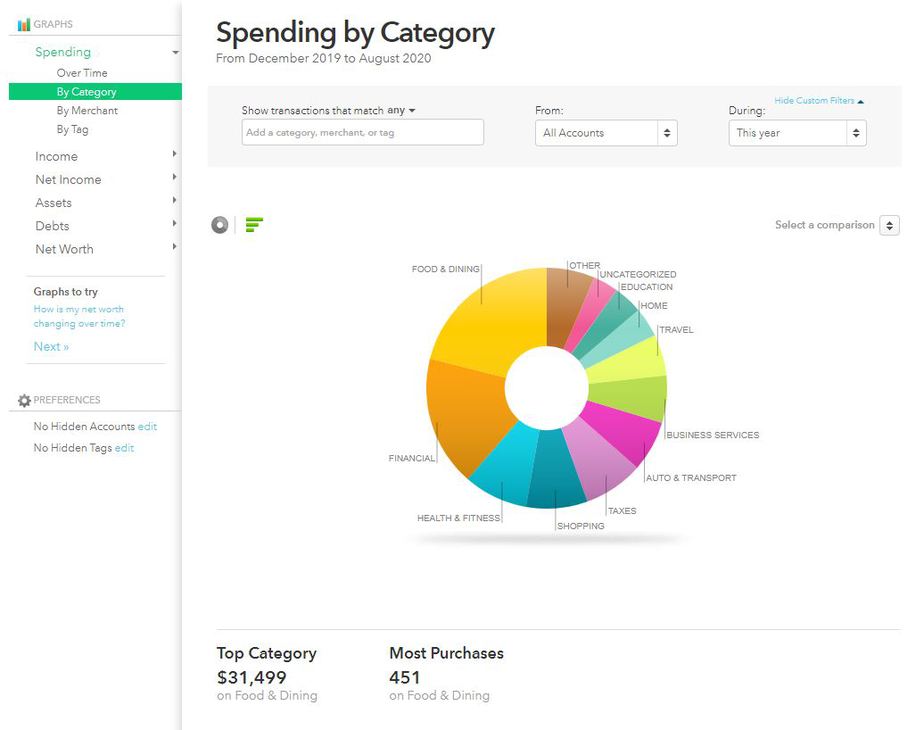
Another great helper is www.mint.com.  This is free and very easy to use.

Mint connects to your bank account(s), lets you tag different expenses and put them under different categories for a really detailed view. This way you can see where your money went and where it came from, whether these are personal or locum tenens expenses.

Mint expense report
Expense report example: you can click on each category to see details

EXPENSES RECEIPTS

If you ever get audited by the IRS (spoiler alert: it’s not a fun experience), you want to have proof you’ve actually spent money you claimed you spent.

To track receipts, I take pictures of my receipts and then back these up on a cloud storage.

If you want to get “fancy” you can use an Expensify app. This one is actually also well suited for people who want to track their day-to-day expenses. This app is basically an expense management system.

Its best feature is the ability to take pictures of your receipts, which the app then transcribes and stores. In addition to this, you can track your credit cards, log mileage using GPS and even connect to apps like Uber and Lyft.

TRAVEL

Although this is technically not a “travel” app, Evernote is one of the few apps that I actually use a lot when I travel.

The main use for me is the ability to create checklists. After forgetting my gym clothing and my noise-canceling headphones (they are a big deal to me as they help me sleep better in hotels), I sat down and created a packing list of ALL the things I need when traveling. 

Another cool feature I absolutely LOVE in Evernote is called “Web Clipper.” It allows you to save your favorite articles and other web content that you can then access when you are offline. This is very handy and gives you something to read during long plane flights.

MANAGING PASSWORDS

If you’re like most people, then you probably have DOZENS OF PASSWORDS which need to be remembered – this is an unfortunate side effect of the digital age. Keeping track of passwords can be a major headache.

Another mistake I’ve seen people make is using the same password for everything. This is seriously dumb and can cause major problems. 

Remembering passwords can also be a big problem if you work in more than ONE hospital or work at the hospital sporadically. 

A simple solution is password management apps. 

Lastpass is a password manager which encrypts your passwords and stores them online. You can access it from your web browser or phone, which is very useful when you’re at the hospital. 

1password is similar to Last Pass and essentially does the exact same thing. 

Both apps are super affordable: 1password is $2.99/month, while Last Pass has a limited free version, otherwise starts at $3/month.

Completing timesheets and other PDF docs

TImesheets are annoying, but you are not gonna get any “cheese” unless you fill them out. It’s as simple as that.

I used to print my timesheets out, fill them out, scan them and then send in an email. It was very clunky.

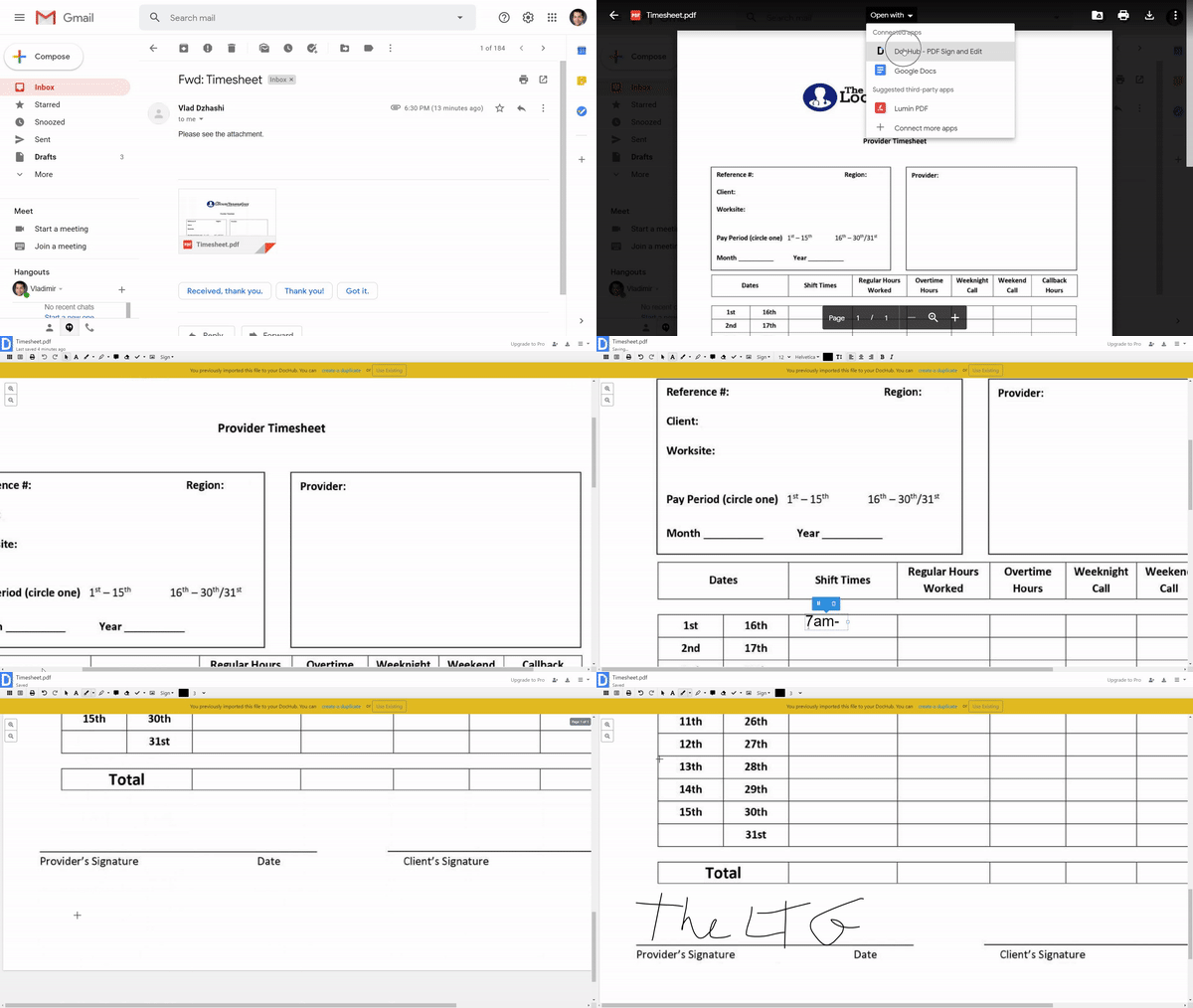
Recently, I’ve discovered a website called DocHub which makes it easy to edit my timesheets and other PDF files.

If you use Gmail, simply click on the PDF attachment that comes in an email, click on “open with” and select DocHub – PDF sign and edit.

DocHub Screenshot

If you don’t use Gmail or your timesheet is already saved on your computer, go to the https://dochub.com/ and sign up. You could then upload your PDF and edit it quickly. 

One of the features that I absolutely LOVE is the ability to create a nice-looking “hand” signature and add it to any part of your document with two clicks. This saves me lots of time since I don’t have to print out the document, sign it and then scan it.

Getting rid of the stuff: Shredder

Amazon basics shredder is less than $50, and it’s an important home office tool to prevent identity theft. You can get rid of your sensitive information and always have peace of mind. 

I also use my shredder to get rid of old credit cards and hospital badges.

BONUS: list of resources I use

That’s it! These are all the things that can make your locums life BETTER.

 They are all simple but actionable ways to prevent stress and frustration.

Below, I listed all the time-saving resources I use.

Virtual storage for both documents and photos of receipts

Google Drive

Expense tracking

Mint

Create lists and save my favorite online articles to read offline

Evernote

Password manager

LastPass

Completing and signing timesheets and other PDF docs

DocHub

Printer

HP All in one Deskjet

Shredder

Amazon Basics Shredder

  • Jumpstart your Locums Career!
  • Sign up for my coaching to access:
  • Top Gigs
  • Top Pay
  • Unique resources
  • No stress
Learn more
  • Jumpstart your Locums Career!
  • Sign up for my coaching to access:
  • Top Gigs
  • Top Pay
  • Unique resources
  • No stress
Learn more
New to locum tenens? Check out my complete guide for newbies in 2021!

Filed Under: insurance

Locum Tenens Medical License Guide: Tips For Docs Who Can’t Stand The Licensing Process!

December 4, 2019 by LocumTenensGuy

old license plates
authors portrait

Vlad Dzhashi, MD

Without a license you cannot practice medicine, it’s as clear as that.

For employed docs the decision is simple — you apply for a license in the state where you work and live.

It’s more complicated for locums physicians, because in case you didn’t know, you DO need a license in each state you work locum tenens.

Now, I don’t have to explain to you how annoying the locum tenens licensing is.

What I do want is to teach you how to make it as seamless as possible.

I doubt you’ll ever enjoy applying for new licenses, but after reading this post you’ll become a “power user.”

Here’s what I’ll cover:

  • 1 – How to stay on top of your licensing for locum tenens forever

  • 2 – Shortcuts to getting a new license fast
  • 3 – How to work all over the country with only one license
  • 4 – Real costs of a medical license
  • 5 – Keeping multiple licenses
  • 6 – Whether you should let your license lapse or switch to “inactive” status to save money.

Buckle up and let’s get going!

Ecstatic man

Locum tenens license definition
Locum tenens license is defined as either any permanent state license that lets you practice medicine in that state (including locums) or a special license that is active only for a short period of time (see below).

So, for most docs, there’s really no difference whether you are applying for a regular state license to take the permanent job or locum tenens gig. 

How to stay on top of your locum tenens licensing forever

Bad news: You’ve got some work to do! 

Good news: Once it’s done, this will save you a TON of time.

So…listen up!

👉 1 – Get your cr@p together!

To get started, you need to scan important documents and create a virtual folder for all of them. You can use a scanner or your smartphone camera.

Here’s a minimal list:

  • Education certificates – medical school, residency/fellowship, ECFMG, etc.
  • Copies of state licensures
  • DEA certificate(s)
  • Proof of continuing medical education
  • Immunization Records (such as flu, TB, Hep B)
  • Malpractice records (if applicable)
  • Driver’s license/ID

The next thing is to save the documents on both your personal computer and on cloud storage (e.g. Dropbox, Google Drive, Apple iCloud, etc.).

When you apply for a new license, you can upload these documents from your computer or download them from the cloud and attach them to an email.

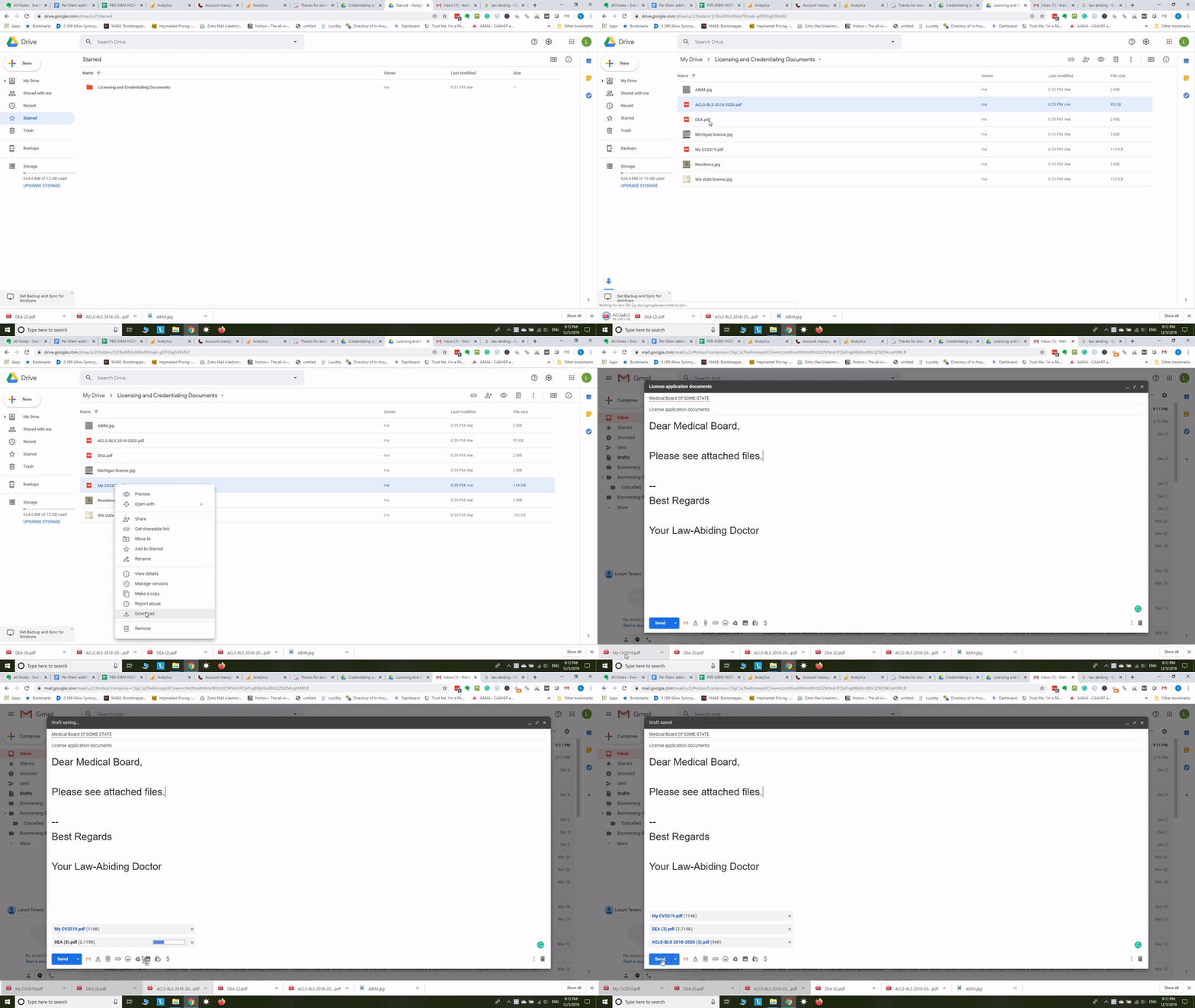
Here’s how I do it:

Make sure you update your documents every year or so.

Once you’ve created your “database,” you are ready for the next step.

👉 2 - Sign up for FCVS

Once you decide you need a new license, FCVS verifies core credentials (identity, medical school and residency training) and submits the report to one or multiple state medical boards.

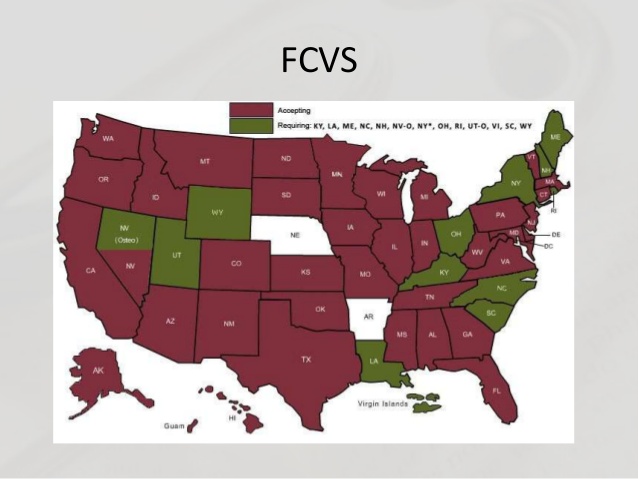
FCVS Map
All medical boards accept FCVS but some require it

Why is FCVS a MUST?

First of all, some states REQUIRE FCVS and will not issue the license without an active FCVS profile. So using FCVS will give you  more options.

Second, it can cut your licensing time by months!

I used it for a Florida license and got it within three weeks after submitting all the documents. Without FCVS it would have taken three to four months. Not bad, and it can help when you need to get licensed quickly – e.g., if you find a great gig in a new state.

You can also negotiate a better deal compared to unlicensed docs (check my guide on how to negotiate locum rates for some advice).

👉 3 – Get at least two DEA registrations

DEA registration allows you to prescribe controlled substances. It’s not controlled by any state medical boards, but you won’t be able to practice without it.

One caveat for locum tenens is that you need to have a separate DEA registration for each state you work.

However, you can transfer DEA license to another state.

Let me explain:

Personally, I have two DEA registrations. The first I use for WA state, where I work 90% of the time. The second one I use for other states, and recently I “linked” it to California.

If, let’s say, I decide to work in Idaho, I would need to simply send an email to the DEA agent requesting a “switch,” and shortly after (a day or two), my registration would be “assigned” to a different state.

That’s why it’s a good idea to have at least one “spare” DEA registration number. 

Once you have it, you can keep switching it among the states you work in.

Also, having an extra DEA number will save you lots of time on the hospital credentialing (an active DEA number is typically required for that) so that you can get started with a new locum gig quickly.

Onward.

Locum tenens license shortcuts

If you’ve done all the prep work I talked about so far, you are on the fast track to cut your licensing time by months. 

But there are other ways to get you up and running for new locum gigs fast:

👉 1 – The Interstate Medical Licensure Compact (IMLC):

IMLC allows you to get one or multiple licenses using a simple and fast application process.

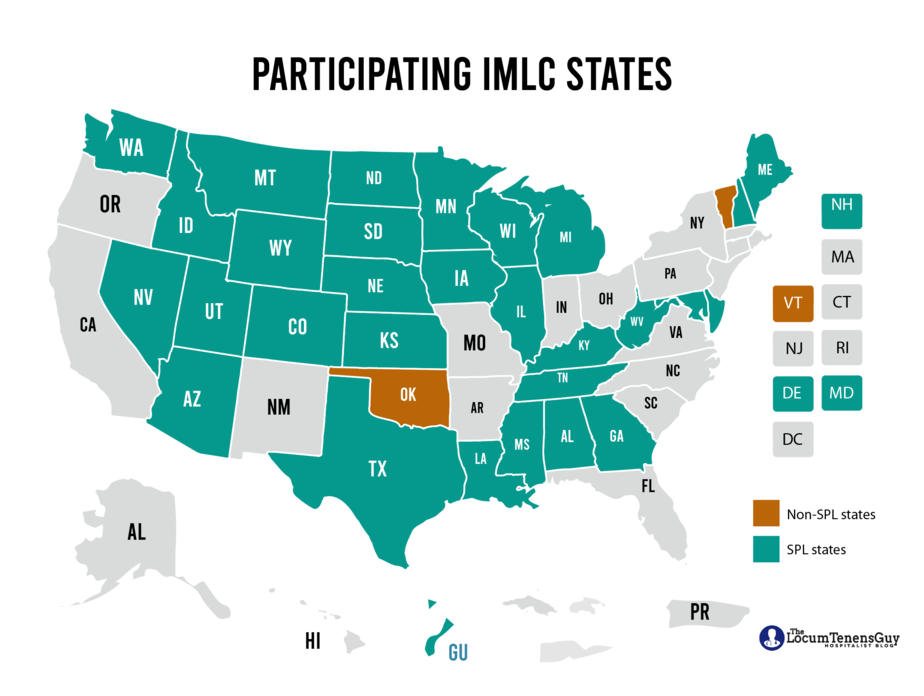
You qualify if you are licensed in one of the sponsoring states (32 at this point) as long as your primary practice and tax residence are in that state. 

Check out the IMLCC map below for the visual.

IMLC participating states

Another requirement is a “clean” practice history, i.e. no board investigation, no disciplinary actions and no malpractice history.

IMLC application is not cheap– it’s $700 plus the cost of the each state license you apply for.

The beauty of this is that it works very quickly and you can get multiple licenses (32 states participate as of now) using the same application.

Although I’ve never used it myself, I know hospitalists who got new licenses in a matter of two weeks.

Check out my detailed Interstate Medical Licensure Compact guide to learn more.

👉 2 – Temporary medical license:

A temp license lets you practice shortly after you’ve applied for a full license, while it’s still “cooking.” 

Eighteen state medical boards give you this option: AR, GA, IA, ID, IN, KS, KY, MA, ME, MO, ND, OK, OR, SD, TX, UT, WA, WY.

👉 3 – Locum tenens license:

A locum tenens license is different from temporary: it has a separate application and it’s good for 60-180 days, depending on the board.

If you later decide to stick around and work for a longer period of time in the state, you’ll need to apply for a regular license.

States with locum tenens license

Here are the states with locum tenens license: Alaska, Arizona, Indiana, Maine, Massachusetts, Nebraska, Nevada, New Hampshire, South Dakota, Tennessee, Wisconsin.

Check out this pdf document for more details.

How to work all over the country with only one locum tenens medical license

You may be surprised, but you can work all over the US with only one state license if you pick government locum gigs (VA, Tribal Health, etc.). 

They tend to pay less compared to “commercial” locum tenens, but some docs prefer them since there’s no personal malpractice risk.
Please see the following  screenshot from the VA website:

VA malpractice

To find those gigs, just google “government locum tenens hospitalist” and see what comes up. 

There are a few locum tenens agencies that specialize in this type of set-up, with AB staffing and Eskridge & Associates coming to mind first.

New to locum tenens? Check out my complete guide for newbies!

Costs of medical licenses:

Although there are good ways to save time on licensing, there’s not much you can do to save money on them.

The licensing fees range from $140 for a Wisconsin license to almost $1,300(!!!) for an initial California license.

The only good news here is that you can deduct all of the licensing expenses from your 1099 income.

Now, before you go too crazy and apply for licenses in all 50 states along with Guam and the American Virgin Islands, you should keep in mind the additional hidden costs of licensing:

  • FCVS – $375 for the initial application to create your profile, $95 for a subsequent application and $65 for each state you apply.
  • DEA – Each new DEA registration is $731, and it must be renewed every three years.
  • CSR (Controlled Substance Registration) – It’s required to prescribe controlled substances in 25 states on top of your DEA registration. On average it costs about $100 and has to be renewed every two to three years.
  • Licenses verification: Services like VeriDoc connect state boards directly with each other to verify your existing licenses when applying for a new one. The cost runs $10-60 for each board you are already licensed with.
  • Misc expenses: fingerprinting services, postage: $20-$100 for each state
  • And, of course, license renewal fees…

Maintaining multiple licenses for locum tenens

Here’s a problem, my friends:

Medical licenses are like cars – the more you own, the more you pay to maintain them. 

So even if you don’t practice in all the states you are licensed in, you need to pay to renew them every two to three years.

For example, keeping my five licenses active costs me about $1,000 every year.

But it doesn’t end there! 

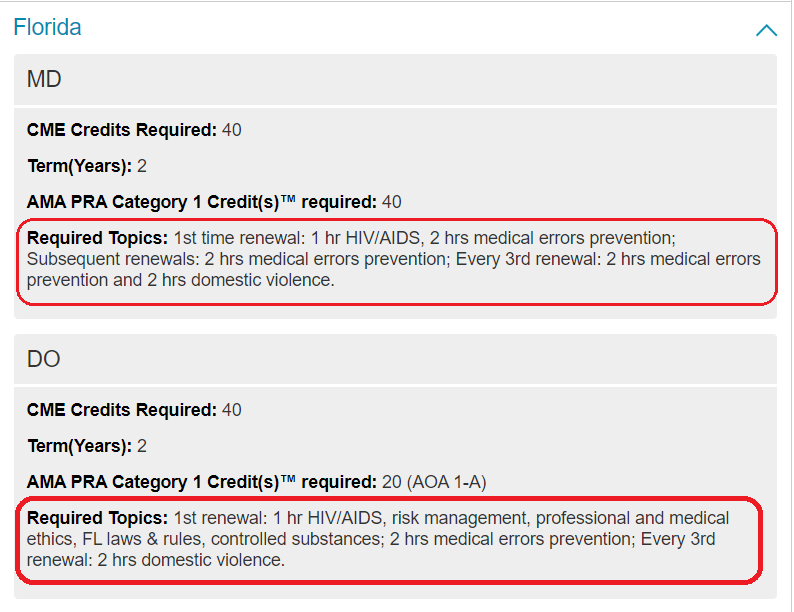
You also have to fulfill each state’s CME requirements by getting 20 to 50 CME hours per year.

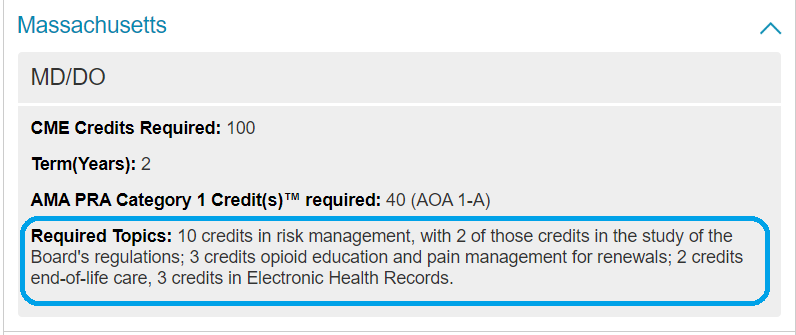
Some of the states got “carried away” and decided the doctors have to take more “exotic” CME courses.

Here are some examples:

Massachusetts CME requirements
Florida CME requirements

And guess what? 

You have to pay for “state-approved” training courses which can be hundreds of dollars on top of your renewal fees.

Should you let your locum tenens license(s) lapse?

Since it is not cheap to keep your licenses, you may wonder if it is a good idea to let them lapse.

I think if you are 100% sure you don’t plan on working in that state, it is ok not to renew your license.

But, if you are not, I would only get rid of licenses that are expensive to renew and easy to get if needed again.

Also, feel free to let the state Controlled Substance Registrations (CSR) lapse, as they are not required to maintain a license and you can typically renew them fast.

Can you avoid renewal fees if you change your physician state license status to “inactive”?

Certain states (e.g. CA, OR, NC) let you switch your license status from “active” to “inactive.”

This way, you won’t need to fulfill the state’s CME requirements but…you still need to pay renewal fees.

Locum tenens licensing CONCLUSION

If you think about it, physician locum tenens licensing is a big mess that we all have to deal with.

I hope I’ve given you enough information to understand how it works and how to navigate it like a pro.

Filed Under: insurance

The Ultimate Guide to Locum Housing: I wish I knew this a loooong time ago

January 14, 2019 by LocumTenensGuy

authors portrait

Vlad Dzhashi, MD

There’s nothing worse than feeling exhausted waking up in the morning before starting your first shift at a new hospital.

Believe me, I’ve been there and done that. It really sucks!

And I am not talking about being tired because you stayed up late watching movies on Netflix.

I am talking about losing sleep while staying at a crappy hotel room because you didn’t do your homework beforehand.

What do I mean by that?

Well, if you don’t know your housing options, don’t double check what you are offered, and don’t negotiate and request the quality housing you deserve, sooner or later you’ll have a few (if not many) sleepless nights.

That’s why I’ve created the most comprehensive locum tenens housing guide on the web! (Trust me, I’m not exaggerating! I’ve searched for one and couldn’t find it.)

So read carefully and I promise you’ll find lots of helpful tips, whether you are new to locum tenens or you’ve traveled as a locums doc before.

Here’s what I’ll cover today:

 – Locum housing options with their pros and cons.

 – Tips on how not to be a “sucker.”

 – Locum housing DIY – does it make sense?

 – How to negotiate your locum housing to get the most of it.

 – At the end, I’ll also reveal a LocumGuy’s “secret” on how to make money “out of a thin air” while traveling for locum work.

So stay tuned and read till the end!

Let’s dive right in!

Locum housing option # 1: Hotels

Hotels come in all shapes and sizes, but 3-star accommodation is a locum industry standard.  This is what you are most likely going to get for your locum travel.

The biggest pros of the hotel are that it gives a predictable experience and there are plenty of them to choose from.

Another perk is a hotel rewards program. Every large hotel chain has one. You get free points that you can use later for your personal travel expenses, room upgrades, etc. (Here’s a list of the largest rewards programs that can help you to compare them)

The key is to sign up as early as possible to start accumulating the points.

I actually was surprised by how quickly the reward points added up when I got a late check out after reaching a silver membership status in just a few months.

 Now, here’s my word of caution about the hotels: if you work locum tenens long enough, at some point you may end up in a run-down, two-star hotel (disguised as three-star) with an old, noisy heating system and a funny smell coming from the bathroom, like I did a couple of times.

How did it happen?

The truth is that the locum companies don’t care which hotels you stay in. So it’s eventually up to us to screen the hotels beforehand.

How do I do this?

I use the TripAdvisor website or app.

It’s got a super helpful “traveler photos” section where you can see actual rooms and amenities pictures uploaded by the hotel guests, which gives me a very good idea of what I’m actually going to get.

I also always check the hotel rating and would say NO to anything less than 4.0.

This simple routine only takes a couple of minutes but will save you from sleepless nights.

What else do I check beforehand?

I always make sure the hotel amenities include a gym and a kitchenette (aka small kitchen).

Now, even if you don’t want to bother cooking for yourself, rooms with a kitchenette tend to be a little more spacious, and you are guaranteed to have an actual fridge (not just a freezer) and a microwave.

This way, even if you order at a restaurant and take the food home, you’ll be able to keep and finish it the next day.

Hotel tips:

1 – Sign up with the rewards program.

2 – Do not ever agree to anything less than 3 star.

3 – Check TripAdvisor travelers photos and ratings.

4 – Consider getting a room with the kitchenette.

Luxury tenens, anybody?

Ok, what if for some unclear, random reason, you are attracted to the higher standards, and every time you think of a 300 sq ft hotel room, you get nauseous and claustrophobic?

Not a problem!

There’s always an option of upgrading your hotel room to a suite. You could pay out of pocket for this ($30-$50 extra per night on average), use your reward points, or have the agency/hospital cover the difference.

Onward.

Locum housing option # 2: Airbnb or similar sites

Renting an Airbnb apartment would pretty much always give you more bang for the buck: you get a more spacious place to stay, a better-equipped kitchen and overall a more private, home-like experience.

It also may be a better choice if you plan to bring your spouse or family with you.

Here’s a problem though: anybody can list his property and call himself “a host.” So unlike hotels, there’s really no “big brother” watching and keeping track of the quality.

A few times I’ve had a quite unpleasant experience with both VRBO and Airbnb apartments, so I’ve come up with very strict but simple criteria to filter out the “bad” and the “ugly.”

The first thing I do is read the actual reviews, paying close attention to the most recent ones. I only consider properties with 20+ reviews (the more, the better) and a rating of above 4.5 stars. This is a first proxy for the quality.

Second, I only pick the listing by so-called “super hosts” — those are highly rated hosts with great track records.

Trust me, if you use these two simple criteria, you’ll stay away from trouble 99% of the time.

Now, if you book your own housing, there are a couple other things to keep in mind:

One is the cancellation policy for each particular rental. Unlike hotels, it is usually not that flexible and it may vary among them .

Most hosts won’t let you cancel 24 hours before your stay, and some hosts will only reimburse 50% of your stay even when canceled months in advance.

That’s especially important since as a locum, you could get your shifts canceled (although no later than 30 days before the shift is scheduled). That’s why the only two cancellation options I would accept are “moderate” (lets you cancel 5 days in advance) and “flexible” (can cancel 24 hours in advance).

Another hack I’ve learned booking apartments myself is that you should always start looking for a place ahead of time (at least 3 months before your shift dates), since good rentals (great cost/quality ratio) are gone very early.

Finally, although Airbnb has the most listings, there are many other decent sites you can use for short or long-term rent:

VRBO

Homestay

HomeAway

Booking.com

Flipkey 

Airbnb checklist:

1 – Rental should have more than 20 reviews, with a minimal rating of 4.5 stars or above.

2 – Stick with “Super hosts.”

3 – Consider only apartments with “flexible” or “moderate” cancellation options (important only if you book your own housing).

4 – Book early (important only if you book your own housing).

Onward.

New to locum tenens? Check out my complete guide for newbies!

Locum housing option # 3: Corporate apartment

The corporate apartment has similar pros of a hotel since it’s listed by “professional” people, and much like Airbnb, it gives you more of a home-like experience.

I recently stayed at one of these apartments and had a great experience. So far I think this is probably the best option out of all three.

If you plan to find corporate accommodations yourself, just google “furnished” or “corporate” apartment  + your location. I’ve also used some dedicated sites which have lots of listings and can be searched by location.

Keep in mind that most corporate housing lease terms start at 30 days, and there are fewer options to choose from compared to Airbnb housing.

Now, the main drawback of the apartment rentals (both Airbnb and corporate) is that they will have fewer amenities compared to the hotels (e.g. no pool, no vending machines), will have no breakfast and no room service, which may be a dealbreaker for some.


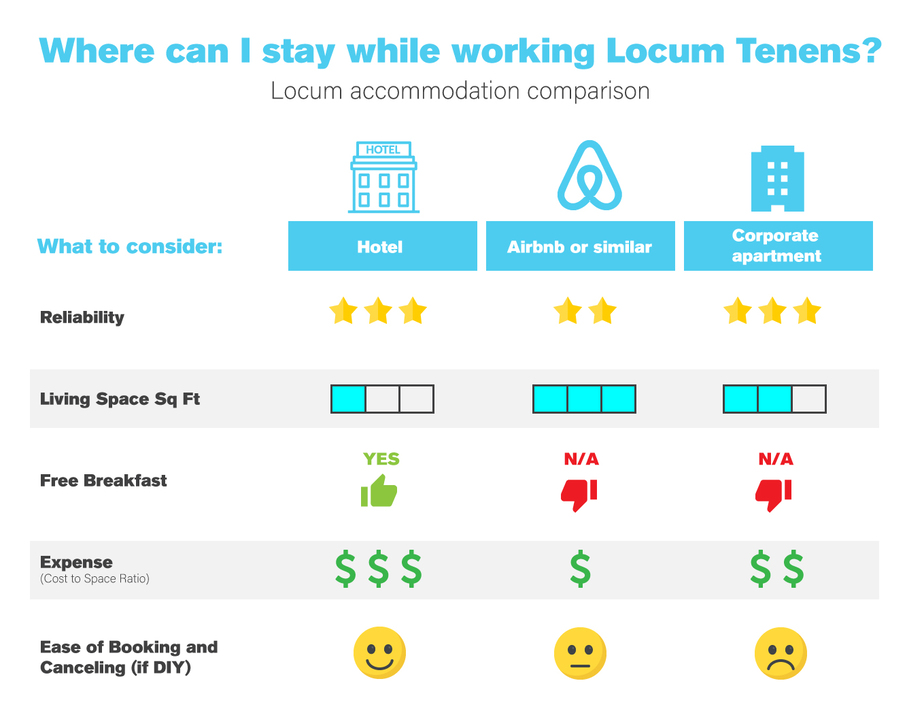
Locum housing comparison table

Finding housing yourself - to DIY or not to DIY?

All three housing options can be covered by your locum agency and hospital you work with, or you can do it yourself.

Most of the time I prefer others to take care of my locum housing, but there are times when the DIY option makes sense. This can include times when:

 – You work directly with the hospital/clinic and they don’t want to deal with your travel arrangements.

 – You prefer a bigger space, and the agency/hospital is not willing to walk an extra mile to make you more comfortable (usually not a good sign).

 – You travel with pets and the hotel is very restricting about that.

 – You’ve got a taste for something special and/or super expensive (e.g. house at the lake) or something weird (e.g. treehouse). You never know, right?

Housing Negotiation Tips:

Now, it’s time to get down to work and negotiate the best possible accommodation for ourselves.

1 – First thing first: you need to make up your mind and decide on which housing options you would like.

2 – Second, remember that in locum business, everything is negotiable and housing is no exception. And most, if not all, locum companies will agree to rent a decent place for you as long as YOU ASK FOR IT!

So never hesitate to request the housing option you want!

3 – Third, let your agency/hospital know about your housing preferences BEFORE you are “presented” to the hospital. This way there are no surprises on either end.

But what if you haven’t negotiated your housing upfront and you are not happy with where you are staying?

It’s actually very easy to request an upgrade (getting an apartment or a suite), especially if you’ve worked with the agency or hospital for some time.

Here’s the exact script that I’ve used before:

“We’ve worked together for a while and my overall experience has been great. The only thing that bothers me is this tiny hotel room I am staying at. It just gets too depressing spending so much time in a small space! That’s why I wanted to get an upgrade.”

Now that we know all our options and how to properly negotiate the locum housing, let me reveal a cool hack to make an extra $.

The DIY “hack” for frugal doctors:

Here’s what you need to do:

1 – Find a cheap room/entire place that runs beyond the average $100-130/night hotel rate.

It can be something you found on Airbnb or let’s say one of your colleagues or family member rents out a room or a guest suite for a reasonable price (it really depends on the location, but I’ve seen $30-50/night for a decent room and even studio/apartment).

2 – Look up the 3-star hotel rates in the area you will be staying.

3 – Talk to the agency/hospital you work with and request the housing reimbursement at the rate you’ve discovered (usually runs at about $100-130/night).

4 – Cha-ching! You get your money and say many thanks to the LocumGuy!

Now, let’s calculate how much you can actually make:

Pretax gain: (14 shifts a month which translates into a 16-night stay):

Let’s say you spent $50/night and you got your $100/night reimbursement, so you’ll pocket $50/night difference, which will give you a total of $800/month or $9600/year.

Almost $10K! Out of a thin air!

Not bad!

Now, this approach is not for the faint-hearted, but I know frugal physicians who’ve mastered this strategy for additional income.

Conclusion:

I’ve covered a lot of ground today, and now you know everything you need to get the best locum housing possible to have a home away from home!

P.S. What locum housing do you prefer? Why? Please let me know in the comments below!

  • Jumpstart your Locums Career!
  • Sign up for my coaching to access:
  • Top Gigs
  • Top Pay
  • Unique resources
  • No stress
Learn more

Filed Under: insurance

  • « Go to Previous Page
  • Go to page 1
  • Interim pages omitted …
  • Go to page 3
  • Go to page 4
  • Go to page 5
  • Go to page 6
  • Go to Next Page »

Primary Sidebar

x